The hill has two Iron Age forts and one mysterious bank feature.
The Lower Camp hill fort is just above the carpark. It is a good place to take young children for a picnic or games of hide-and-seek. Please try to keep it clear of dog fouling. The huge Earls Hill Fort encloses the trig point at the summit. A walk round the ramparts gives breathtaking views in every direction.
Between the two forts is a mysterious bank known as the Cross Dyke in the trees at the northern end of the ridge. Our best guess is that it was intended to be part of a larger defensive structure that was never completed.
These features are protected by law. In August Harriet Sharp, an archaeologist from Historic England, came to inspect them and advise us on future management. Her report was generally encouraging. She approved of the work we have done and made suggestions for the long-term protection of the sites.
Ideally, hill forts should not have trees growing on them, but unfortunately both the Lower Camp and the Cross Dyke were covered in plantation forestry in the 1960s. Harriet told us that the established trees on the Lower Camp are not doing much harm and their shade is helping to suppress undergrowth. We can cut back lower limbs to improve the visitor’s view of the fort, but we don’t need to fell them unless they look likely to fall over and pull out their root plates. On the Cross Dyke the situation is worse: plantation trees on the lower side of the bank are reaching maturity and leaning over the bank in the prevailing wind. They need to be felled before they tear out their roots. This is a big job and SWT will seek contractors to do it when funds are available. A big issue to resolve will be what to do with the timber: extraction from the summit site would be difficult, and some may have to be left lying as habitat for invertebrates.
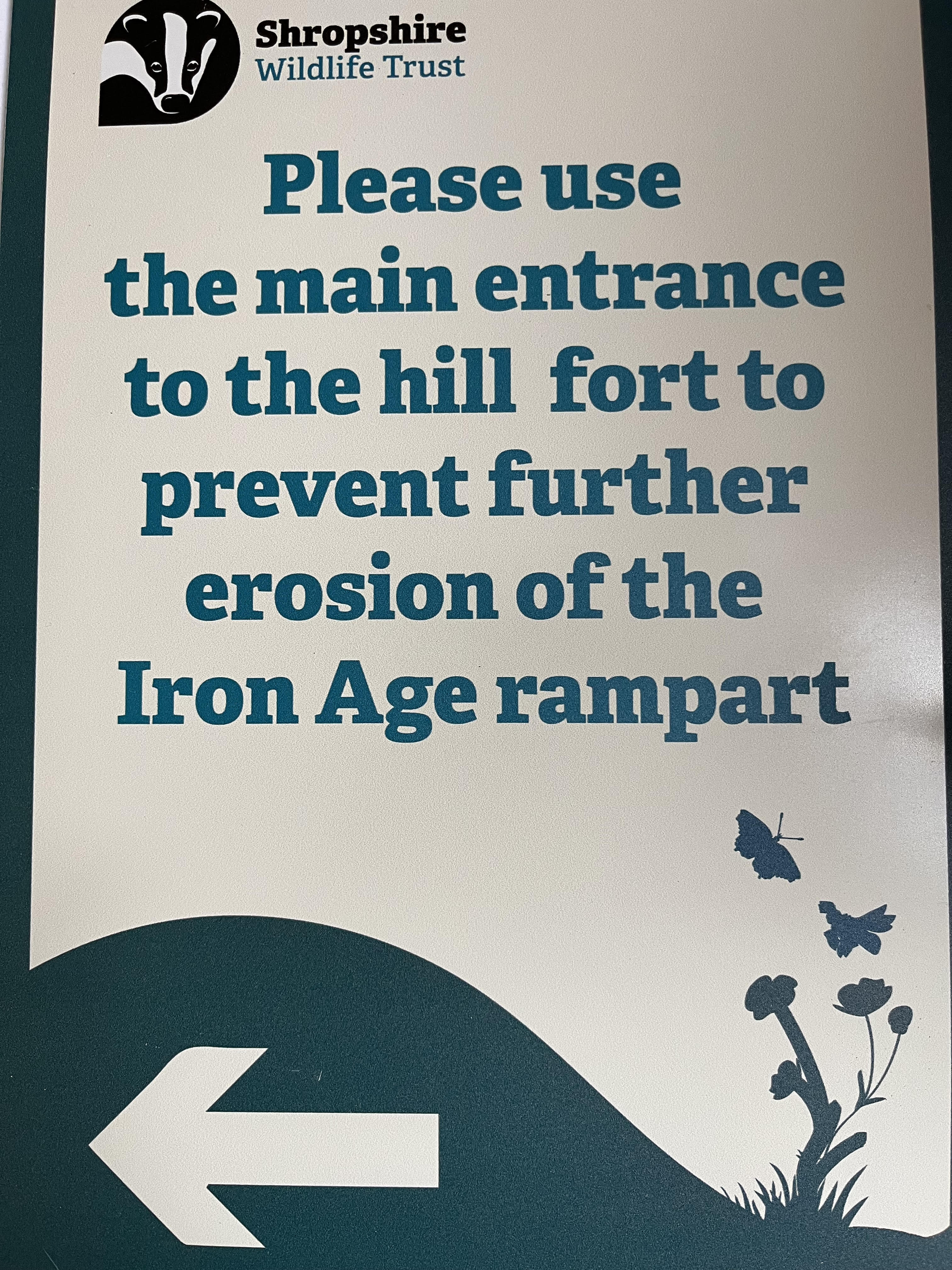
Thankfully Earls Hill Fort has no trees, but it is suffering increased erosion due to more visitors climbing up there. Harriet has asked us to put signs to stop people who have walked up the Craft valley cutting the corner and entering the fort over the rampart, which is being damaged. We will encourage people to use the original Iron Age entrance at the north end of the ridge. She was glad to see no damage from mountain-bikes. If you know young people with bikes, please remind them that they must not use them in the Nature Reserve or on the Scheduled Ancient Monuments. We are very lucky to have Eastridge Woods mountain biking trails only three kilometres away: ask them to go there!
The hill forts are over two thousand years old and in remarkably good repair. We are lucky to have them right on our doorstep.